
Bachata ladies styling: what it is and how to train it
What ladies styling in bachata actually is, what you work on in a styling class, and why it improves your partner dancing too. A practical guide to getting started.
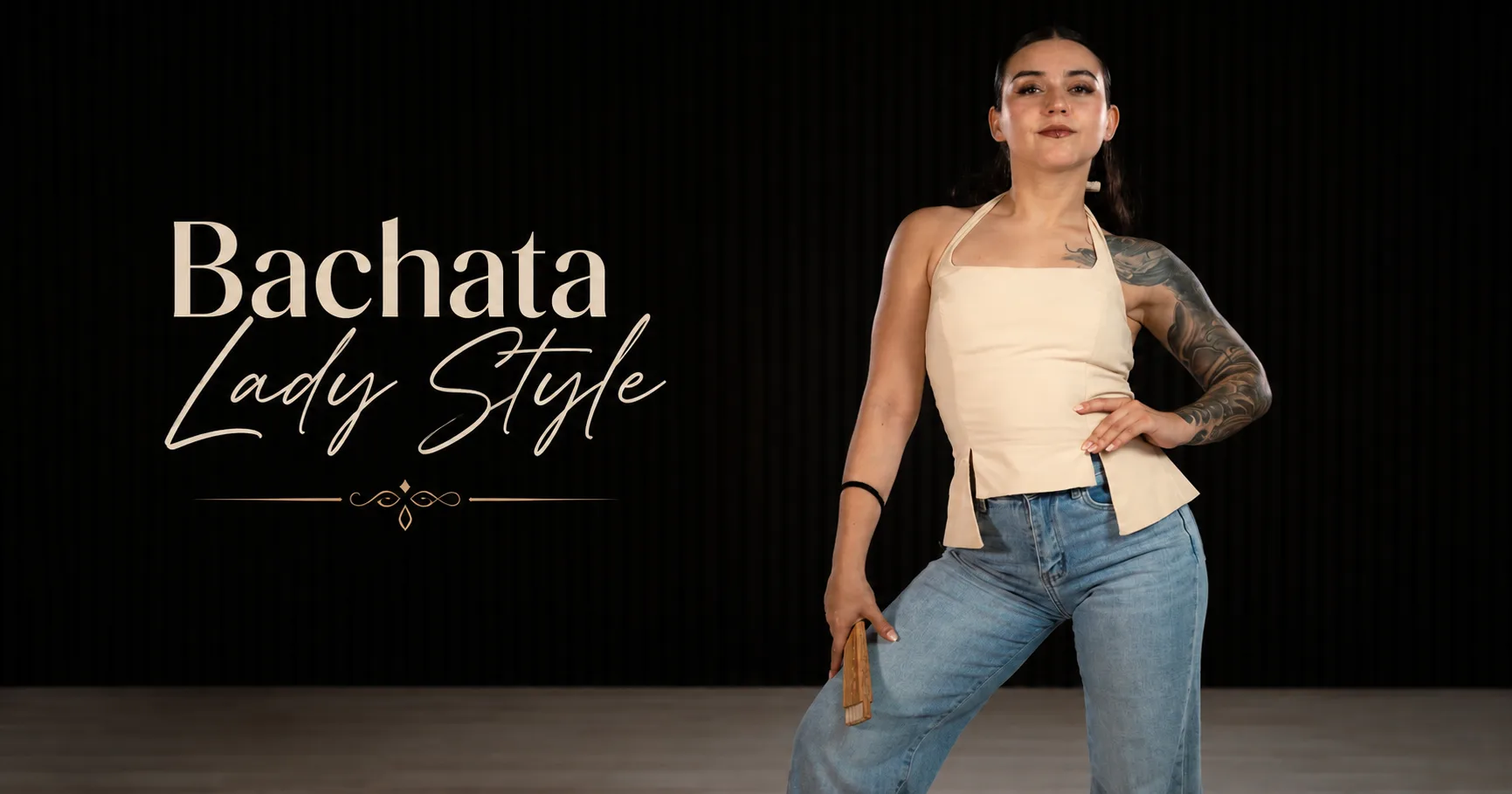
You dance well. You follow the leads, you know the steps and you enjoy yourself on the floor. Then one day someone films you, and watching it back something feels off: the steps are there, but your body isn’t saying anything of your own.
That missing piece has a name — ladies styling — and, contrary to what many people believe, it isn’t a gift you’re born with. It’s trained, like everything else.
What ladies styling actually is
Ladies styling is the individual work of whoever dances the follower role: everything you do with your body when your partner isn’t leading anything.
It covers the moments nobody explains in a partner class: the arms when they’re left free, the basic step that looks flat, the musical pause where you just wait for the next move. The lead takes up maybe half the time you spend dancing; the other half is yours, and that’s where styling shows.
The most common misunderstanding
Many people equate styling with “doing pretty things with your arms”, or with learning flashy choreographies to repeat on the social floor. It’s the opposite.
A memorised routine is obvious from across the room: it comes out the same every time, whether it fits the song or not, and it usually lands early or late against the music. The goal of styling isn’t to collect moves — it’s to train your body to respond on its own, with resources you can use in any song.
The five building blocks
1. Body technique. Hip, torso and shoulder isolations; axis and weight control. It’s the least glamorous part and the most important one: without it, everything else looks unstable.
2. Arms and hands. Not just what to do with them, but when. An arm moving during a lead can interfere with it; the same arm, two beats later, looks perfect. How you finish a movement counts too — most dancers abandon them halfway.
3. Walks and waves. The body movement typical of sensual bachata: waves, walks, changes of direction, transitions. It’s what gives your dancing continuity instead of looking like a string of separate moves.
4. Musicality. Stop counting steps and start listening. Where to accent, when to stop, how to fill a silence. Two dancers with identical technique are told apart right here.
5. Attitude and presence. Gaze, posture, confidence. This is what separates executing a step correctly from having people stop to watch how you do it.
Why it improves your partner dancing too
This is the part that surprises almost every student. It sounds contradictory — training alone to dance better with someone — but there’s a very concrete technical reason.
Leading someone who doesn’t control their axis is hard work: every turn needs more force, every weight change arrives late. When that same person owns their centre, their weight and their timing, the lead becomes minimal and the connection improves by itself. It isn’t magic — you’ve simply taken work off your partner.
That’s why styling isn’t a decorative add-on to partner dancing. It’s one of the fastest ways to improve it.
How to start on your own
If you want to make progress before setting foot in a class, three things that work:
- A mirror and a slow song. Work isolations without music first, then with a calm bachata. Ten minutes a day beats two hours on a Sunday.
- Film yourself. It’s uncomfortable, and it’s the most useful tool available: it shows the distance between what you think you’re doing and what actually shows.
- Pick one element per week. One week posture, the next how you finish your movements. Trying everything at once fixes nothing.
The most common mistakes
- Moving your arms constantly. Stillness is styling too; one arm held at the right moment says more than three moves in a row.
- Looking at the floor. It reads as insecurity and it throws your axis off.
- Copying dancers with a different body or level. Having references is good; imitating them literally isn’t. Personal style comes from solid technique, not from imitation.
- Only practising in class. One hour a week maintains; the daily minutes are what change your dancing.
Styling isn’t something you either have or don’t: it’s the sum of technical decisions that can be learned and trained. If you want to work on it with guidance, we teach ladies styling classes in Barcelona and Tarragona, and if you’re interested in styling within sensual bachata, there’s more context on the sensual bachata page.
Frequently asked questions
What is ladies styling in bachata?
Ladies styling is the follower's individual work: body technique, arms, musicality and attitude. It's everything you do with your body when your partner isn't leading anything, and it's trained in specific classes that don't require a partner.
Do I need to know how to dance bachata before a styling class?
A basic level helps you get the most out of the class, even a beginner one. You don't need previous dance training or to be a professional dancer.
Does ladies styling improve partner dancing?
Yes, and it's usually what surprises students most. A body that controls its axis, weight and timing is easier to lead, so individual work feeds directly back into partner connection.
Can I practise styling at home?
Yes. A mirror, a slow song and a few minutes a day are enough to work on isolations, posture and arms. Filming yourself is the most useful tool there is: it shows the gap between what you think you're doing and what actually shows.
Do I need to dance in heels?
No. Heels change your balance and the line of your leg, but all the underlying technique can be trained without them. What matters is footwear you can turn in safely.